Individual Debtor

Individual Debtor Representation

For more than 30 years, The Jones Bankruptcy Law Firm has successfully represented countless individual debtors facing financial distress in Chapters 7, 13, and 11 Bankruptcies. Our team provides strategic, results-driven solutions for every financial challengepersonal or business helping clients restructure today for a more secure and better tomorrow.

Chapter 7 vs. Chapter 11 vs. Chapter 13 — What’s the Difference?

Chapter 7 – Liquidation

Chapter 7 is the simplest and fastest form of bankruptcy. Most unsecured debts—such as credit cards, medical bills, and personal loans— are discharged, often within four months.

Businesses that file Chapter 7 generally cease operations and close, While individuals keep exempt property but risk losing non-exempt assets.


Best for:

Chapter 11 – Reorganization (Businesses and Individuals)

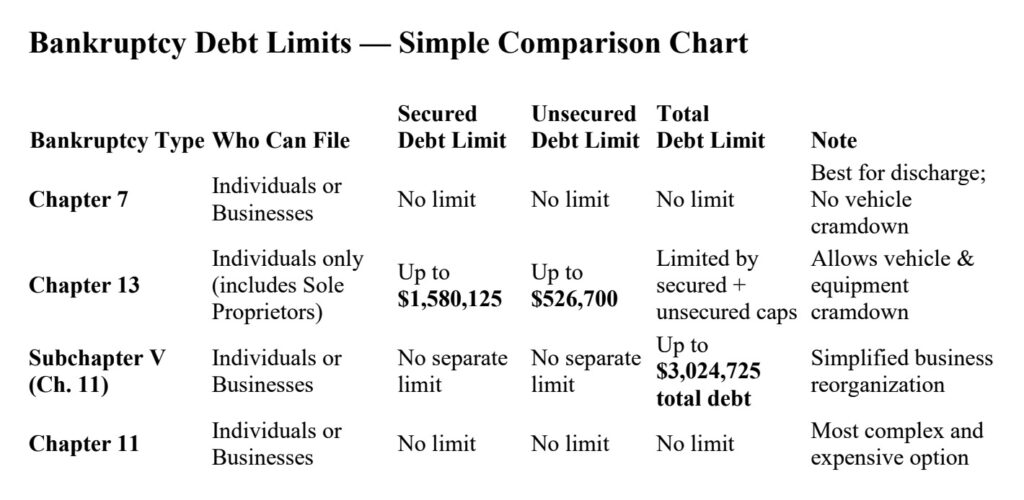
Chapter 11 allows businesses and high-debt individuals to reorganize their financial obligations while continuing to operate or maintain personal financial stability. There are no debt limit and no mandatory 3–5 year repayment plan, giving debtors greater flexibility to propose a customized repayment or restructuring plan that aligns with their needs.

Best for:

Chapter 13 – Repayment Plan (Individuals Only)

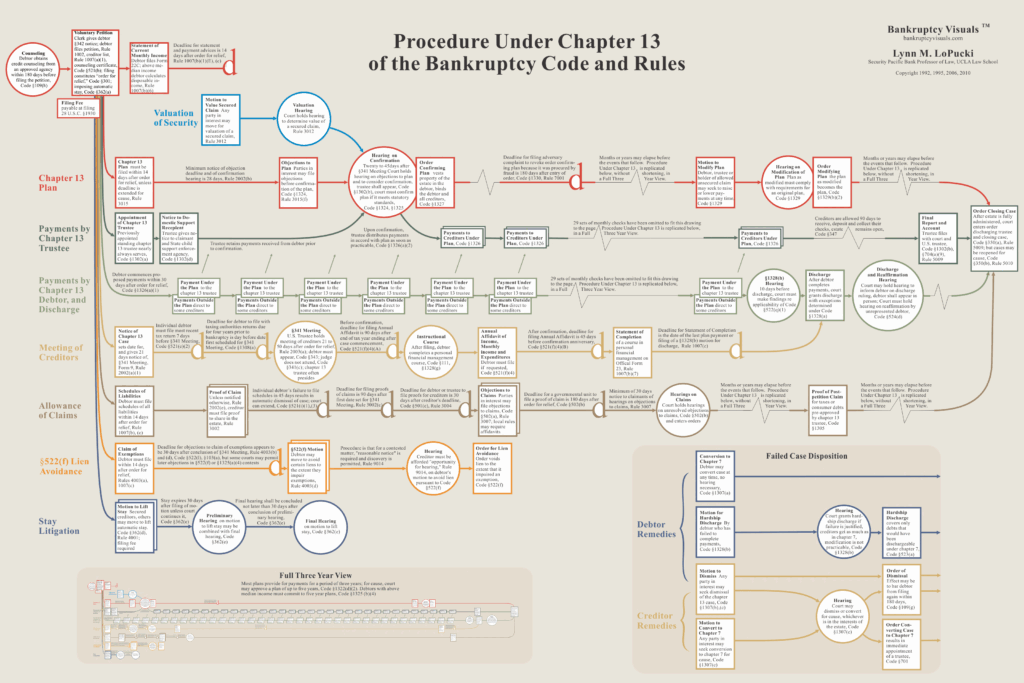
Chapter 13 is a court-supervised 3–5 year repayment plan for individuals with regular income. Debtors keep their property and pay all disposable income to repay creditors over time in accordance with the absolute priority rule.

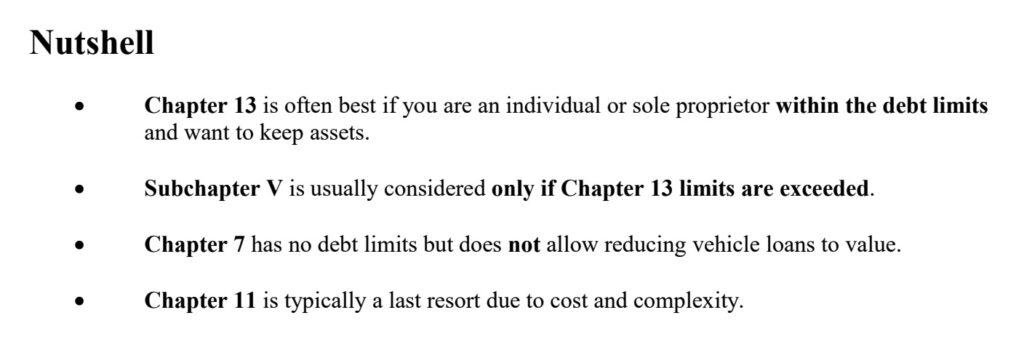
There are strict debt limits and only individuals (not businesses) are eligible to file a Chapter 13.

Best for:

As of February 2026 the above cited debt limits were accurate.
Bankruptcy Debt Limits are always subject to change. Current Debt Limits are published in the  Federal Register.